Market Insights
Milton’s Story: From a Creekside Mill to the Town We Know Today
Before Milton became a growing town, it was a small settlement shaped by Sixteen Mile Creek, a mill, and the families who built a community around it.
By Team MiltonPreCon ·
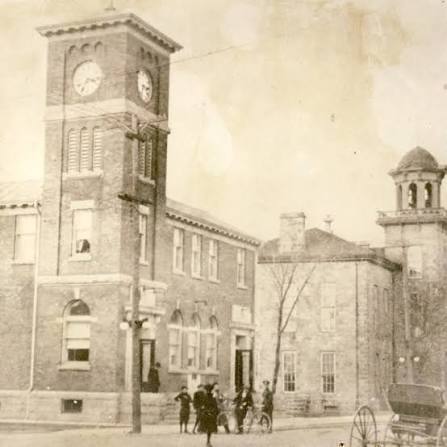
If you have ever walked around Milton’s Mill Pond, you have been close to the place where the town’s early settlement took shape. It is easy to pass the pond, the old streets and the historic buildings without thinking about how they got here. But their story takes us back to a time when Sixteen Mile Creek helped power a mill and the community around it was still known by a different name.
The history before the town
Milton’s story did not begin with European settlement. The land is part of the Treaty Lands and Territory of the Mississaugas of the Credit First Nation and traditional territory of the Huron-Wendat and Haudenosaunee peoples. First Nations, Inuit and Métis people live on these lands today. Recognizing that history is an essential part of understanding the place we now call Milton.
From Sixteen Mile Creek to Martin’s Mills
In the early 1820s, Jasper Martin, his wife Sarah and their family settled near the present-day Mill Pond and Martin Street. Jasper built a gristmill powered by Sixteen Mile Creek. At a time when farming was central to daily life, a mill gave nearby settlers a place to bring grain for grinding. It also drew people to the area.
The small settlement became known as Martin’s Mills. It was a practical name: the mills were landmarks and an important part of local life. Families who settled nearby gradually built more than a place to work. They built a community.
One of those families was the Harrisons, who arrived in 1820. Elizabeth Harrison started the area’s first school. Her story is a reminder that a town takes shape through everyday work as much as through its major buildings: teaching children, raising families and helping neighbours.
So how did Martin’s Mills become Milton?
As the settlement grew, it needed a formal name. According to the Milton Historical Society, the establishment of a post office in 1836 created that need. The name Milton was chosen in honour of the English poet John Milton, whose writing was a favourite of the Martin family.
An older account preserved by the Historical Society adds another detail. It says that residents held a public meeting in the late 1830s to choose a name and that George Brown suggested “Milton.” That account and the Historical Society’s short history differ on the precise sequence, but together they give us the familiar explanation: the community moved beyond the name Martin’s Mills and adopted a name associated with the poet John Milton.
It is a lovely contrast. The settlement grew around the very practical work of a mill, yet its lasting name came from literature.
A village becomes a county town
Milton’s role grew during the 1850s. In 1853, it was selected as the county town of the new County of Halton. County buildings followed, including a courthouse, jail and registry office. In 1857, Milton was formally incorporated as a town and elected its first council. George Brown became its first mayor.
These changes helped turn a milling and farming settlement into a centre of local government. Shops, homes and community institutions grew around it. The streets near Main Street and the Mill Pond still offer glimpses of that early town. Some neighbourhoods were laid out even before Milton’s incorporation, and historic houses in the area remain part of its character.
Milton’s story reaches beyond downtown
It would be easy to tell Milton’s history only through its old town centre. But today’s Milton also includes rural landscapes and communities with histories of their own.
When regional government was created in Halton in 1974, Milton’s boundaries expanded to include the former Township of Nassagaweya and parts of other former townships. Communities such as Campbellville, Brookville and Moffat became part of the wider town. Their stories of farms, crossroads, businesses and neighbours belong in Milton’s history too.
Seeing the past in the Milton of today
Milton has grown far beyond the little settlement beside Sixteen Mile Creek. New homes, schools and neighbourhoods have changed its map, and people from many backgrounds continue to shape its future. Still, the older town has not disappeared. You can find reminders of it in the Mill Pond, in the names of streets and in buildings that have stood through generations of change.
The next time you walk along Main Street or visit the Mill Pond, pause for a moment. Picture the creek powering Jasper Martin’s mill. Picture families travelling there with grain, children learning at the first school and neighbours discussing what to call their growing community.
Before it was Milton, it was Martin’s Mills. And before either name, this land held histories reaching much further back. Knowing those stories makes the place we share today feel richer.